
International Arbitration: Navigating Cross-Border Disputes
International Arbitration: Navigating Cross-Border Disputes with ADR
|
As global business transactions increase, so do the risks of cross-border disputes. When parties from different countries find themselves in conflict, traditional litigation can be slow, costly, and fraught with jurisdictional complexities. This is where Alternative Dispute Resolution (ADR)—specifically, international arbitration—offers a more effective, neutral, and flexible path to resolution.
What is International Arbitration?
International arbitration is a process in which disputing parties agree to resolve their conflicts outside of traditional courts. Unlike litigation, which can be bound by national borders, arbitration operates under agreed-upon international rules, making it a powerful tool for resolving disputes between businesses or individuals from different jurisdictions.
Advantages of International Arbitration
-
Neutral Forum: One of the major benefits of arbitration is its neutrality. Parties can avoid the potential bias or inconvenience of having a dispute heard in the courts of one party's home country. Instead, arbitration offers a mutually agreed neutral venue, ensuring fairness.
-
Flexibility: Arbitration provides flexibility in terms of procedure and schedule. Parties can choose arbitrators with specific expertise, decide on the rules governing the arbitration, and set timelines that suit their needs—something traditional litigation often lacks.
-
Confidentiality: Unlike court proceedings, arbitration typically remains confidential. This is particularly beneficial for companies that wish to protect sensitive business information, maintain trade secrets, or avoid public scrutiny during a dispute.
-
Finality and Enforceability: Arbitration awards are final and binding. Thanks to the New York Convention, arbitral awards can be enforced in over 160 countries, giving parties confidence that their agreements will be honored across borders. This makes arbitration a more predictable and effective tool for resolving international disputes.
-
Cost and Time Efficiency: Arbitration is often faster and less expensive than litigation, which can drag on for years. The streamlined process of arbitration can significantly reduce costs, especially in complex, multi-jurisdictional disputes.
Key Considerations in International Arbitration
While arbitration is an excellent tool for resolving cross-border disputes, there are a few key considerations to keep in mind:
-
Choice of Arbitrators: Selecting the right arbitrator is crucial. Ideally, parties should choose arbitrators with expertise relevant to the dispute and knowledge of the laws governing the contracts.
-
Governing Law and Jurisdiction: It is vital to agree on the applicable laws and jurisdiction before arbitration proceedings begin. This ensures that all parties are clear on the framework under which the dispute will be resolved.
-
Costs: While arbitration is often more efficient, costs can vary depending on the complexity of the case, the number of arbitrators involved, and the location of the arbitration. Proper planning and budgeting are essential.
Looking to the Future
As the global economy continues to expand, international arbitration will play an increasingly important role in resolving disputes. Whether it's disagreements over contracts, investments, or partnerships, arbitration offers a flexible and effective solution for businesses operating across borders.
In a world where the pace of business is fast and international relations are complex, ADR—particularly arbitration—stands out as a tool for fostering cooperation, avoiding costly litigation, and ensuring that disputes are resolved in a fair, timely, and efficient manner.
Post Categories
Featured Posts








Latest Posts








Latest Posts
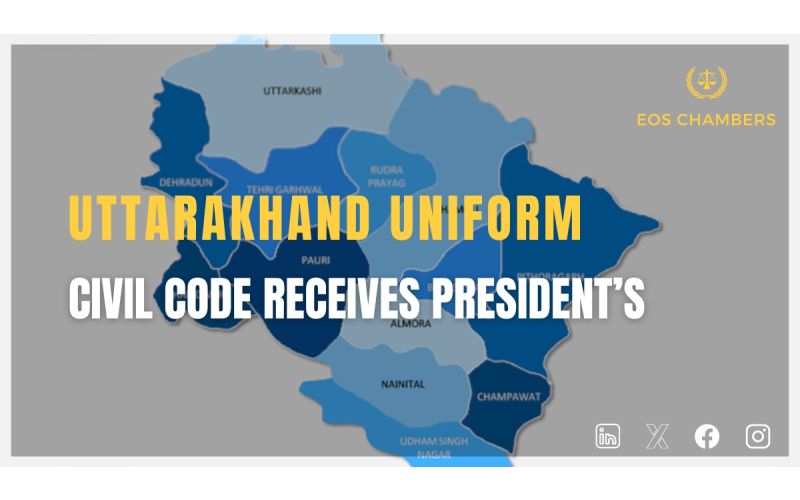
Uttarakhand Uniform Civil Code Receives President's Approval
In a crucial development, the Uttarakhand Uniform Civil Code (UCC) Bill, 2024 has been granted assent by President of India Droupadi Murmu. It may be recalled that in 2022, a committee was formed by Pushkar Singh Dhami-led Uttarakhand Government to ...

Maternity Benefits Must Be Granted Even If Period Of Benefit Overshoots Term Of Contractual Employment: Supreme Court
The Supreme Court on Thursday(17 Aug) held that maternity benefits have to be granted even if the period of benefit overshoots the term of contractual employment. Maternity benefits can travel beyond the term of contractual employment. The court directed the ...

Children Of Invalid Marriages Have Right In Their Parents’ Share In Hindu Joint Family Property : Supreme Court
The Supreme Court on Friday (September 1) pronounced a judgment recognizing the rights of children born out of invalid marriages in their parents’ share in Hindu joint family property. The Court held that children born out of void/voidable marriages are ...

CJI Chandrachud Bats For Mediation As Dispute Resolution Mechanism For Individuals, Govt
NEW DELHI: Chief Justice of India DY Chandrachud batted on Friday for adopting and encouraging mediation, including online mediation, as a mode of dispute resolution other than litigation, saying it would reduce the courts’ caseload and has the potential to ...

Adoption Rights for LGBTQ+ Couples: Legal Challenges in India
We recognize that the right to adopt is one of the most debated and sensitive issues for LGBTQ+ couples in India. Despite increasing societal awareness and progressive judicial rulings, the Indian legal framework still presents substantial challenges for LGBTQ+ individuals ...
Inheritance and Succession Laws for NRIs
📢 Inheritance and Succession Laws for NRIs Understanding inheritance and succession laws is crucial for Non-Resident Indians (NRIs) to manage their assets and ensure smooth transfer to their heirs. Here's a concise guide to these laws for NRIs, including key ...

Speak With Our
Get a Appointment