
BREAKING| Supreme Court Issues Fresh Guidelines For Senior D
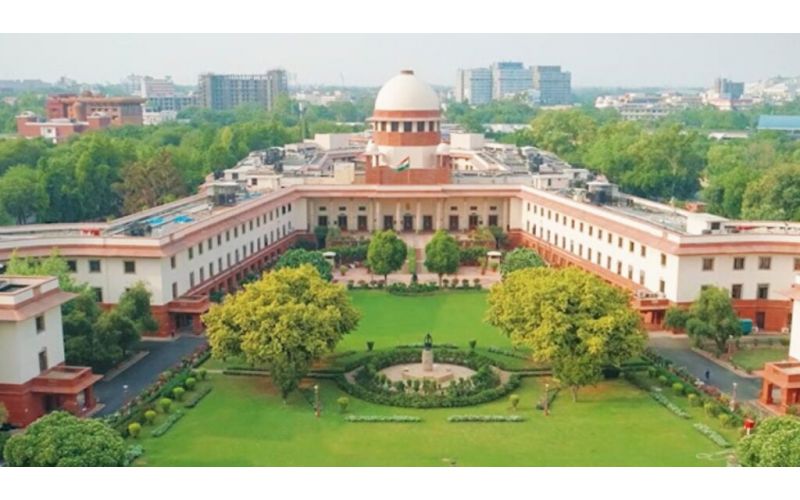
BREAKING| Supreme Court Issues Fresh Guidelines For Senior Designation; Previous Applicants Required To Update Or Submit Fresh Applications
|
The Supreme Court has issued fresh guidelines for the designation of senior advocates following the May 12 judgment in Indira Jaising vs Supreme Court which modified the criteria for senior designation.
The Court has directed that Advocates-on-Record/Advocates who had applied in response to Notice/s dated 25 February 2022 and 7 May, 2022, for conferment of designation as Senior Advocate have to either :
(i) to update their previous applications pending consideration of the Permanent Committee by furnishing additional information/data in the newly prescribed format.
(ii) to substitute their applications by submitting fresh applications in the new prescribed format, or.
(iii) to withdraw their applications by Monday, 07 August 2023 without, in any manner, affecting their entitlement to apply for designation to any High Court or to the Supreme Court, as and when application would be invited in future.
The Court has also invited fresh applications from former Chief Justices and Judges of High Courts who are desirous of being considered for senior designation.
The Senior Designations will be dealt with by a committee comprising :
a) Chief Justice of India : Chairperson.
(b) Two senior-most Judges of the Supreme Court of India : Members.
( c) Attorney General for India : Member
( d) A member of the Bar, nominated by the Chairperson and Members, referred to in (a) to ( c) above : Member.
The names shortlisted by the Committee will be placed before the Full Court. There shall be no voting by secret ballot save in an exceptional situation, for reasons to be recorded. In the Indira Jaising judgment, the Court had ordered that secret voting should be an exception.
Who are eligible to apply?
(i) At least
(a) ten years’ standing as an Advocate; or
(b) ten years’ combined standing as an Advocate and as a District and Sessions Judge or as a Judicial Member of any Tribunal in India whose qualification for eligibility for such appointment is not less than that prescribed for appointment as a District Judge.
(ii) Practice mainly in the Supreme Court.
Note: Applicant-advocates having domain expertise of practising before specialized Tribunals may be given concession with regard to the extent of appearances in the Supreme Court.
(iii) Attainment of the age of 45 years, unless the age limit is relaxed by the Committee, or the name has been recommended by the Chief Justice of India or a Judge of the Supreme Court.
Criteria
In the Indira Jaising judgment, the Supreme Court had reduced the marks awarded for criteria like publications and also included aspects like teaching assignments or guest lectures. The points for notable reported/unreported judgments and pro-bono work has been increased by 10 to make it 50(earlier it was 40).
The criteria is now :
1 Number of years of practice of the applicant-Advocate from 20 the date of enrolment – 20.
( 10 points for 10 years of practice and 1 point each for every additional year of practice, subject to a maximum of 20 points).
2 Judgments reported and unreported ( excluding orders that 50 do not lay down any principle of law); pro bono work done by the Advocate; domain expertise (such as constitutional law, Inter-State Water Disputes, Criminal law, Arbitration law, Corporate law, Family law, Human Rights, Public Interest Litigation, International law, law relating to women) of the applicant-Advocate. – 50.
3 Publication of academic articles, experience of teaching assignments in the field of law, guest lectures delivered in law schools and professional institutions connected with law – 5
4 The test of personality and suitability on the basis of interview for a holistic assessment of the applicant – 25
Applications to be invited at least once a year
The Secretariat of the Committee will initiate the process for designation of Senior Advocate at least once every year by inviting applications from Advocates-on-Record/ Advocates for designation as Senior Advocates.
The Secretariat will publish the proposals received for designation on the official website of the Supreme Court and invite suggestions/views of other stakeholders on the proposals for designation.
Post Categories
Featured Posts


Latest Posts








Latest Posts
The Role of Legal Technology in Modern Law Practices: Embracing the Digital Shift
In today’s rapidly evolving legal landscape, the integration of technology has become more than just a trend—it’s a fundamental shift that is reshaping how legal professionals operate and deliver services. As we embrace this digital transformation, the role of legal ...
SC On Aadhaar: Important Takeaways From The Recent Verdict
The Supreme Court ruled that Aadhaar, the ambitious public scheme that uses biometric data to generate unique identification numbers for citizens, is constitutionally valid, but with conditions. Here are the key takeaways from today’s verdict. Read More >
SC refuses to entertain plea for survey of Krishna Janmabhoomi-Shahi Idgah premises
The Supreme Court Friday refused to entertain a plea by 'Shri Krishna Janambhoomi Mukti Nirman Trust' seeking a survey of the Janmabhoomi-Shahi Idgah mosque premises in Mathura to determine whether it was built on a pre-existing Hindu temple. The apex ...
Cheque Bounce Case Can Be Quashed U/S 482 Only If Amount Is Patently Non-Recoverable; Whether Debt Time-Barred Or Not Is A Question Of Evidence : SC
The Supreme Court observed that the question whether a cheque was issued towards a time barred debt is to be decided on evidence. “It is only in cases wherein an amount which is out and out non-recoverable, towards which a ...
Understanding Section 377 of the Indian Penal Code
Section 377 of the Indian Penal Code, a colonial-era law, criminalized "unnatural offenses," including consensual same-sex relationships. However, in a historic judgment on September 6, 2018, the Supreme Court of India decriminalized consensual homosexual acts between adults, marking a significant ...
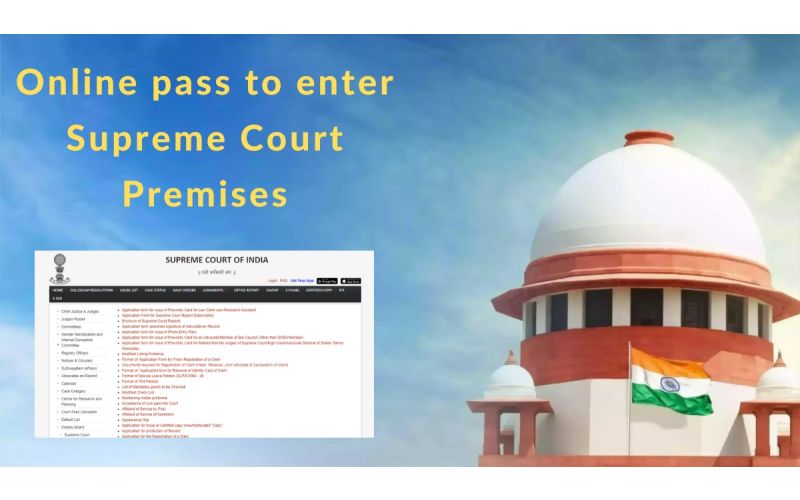
Get Online Pass To Enter Supreme Court Premises
The Supreme Court on Thursday launched ‘SuSwagatam’, a new initiative to generate entry passes online to help those who need to visit the court premises for various purposes. Chief Justice of India (CJI) D Y Chandrachud on Thursday announced the ...

Speak With Our
Get a Appointment