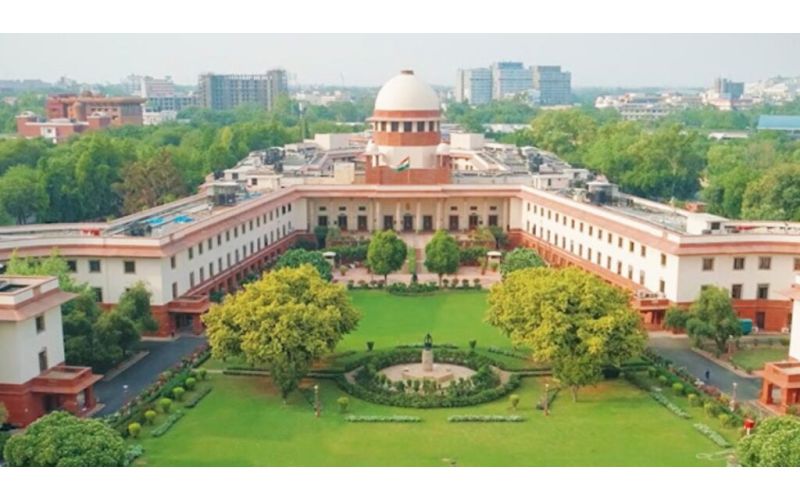
In a recent case, the Supreme Court reminded police officers of their duty to be vigilant before invoking provisions of stringent laws such as the SC-ST (Prevention of Atrocities) Act, stating that officers must be satisfied that the provisions apply to the specific case at hand.
However, the court made clear that this was not to dilute the applicability of such laws, but only to remind officers not to mechanically apply them without reference to the factual position.
The bench of Justices Dinesh Maheshwari and Ahsanuddin Amanullah observed.
“This Court would indicate that the officers, who institute an FIR, based on any complaint, are duty bound to be vigilant before invoking any provision of a very stringent statute, like the SC/ST Act, which imposes serious penal consequences on the concerned accused. The officer has to be satisfied that the provisions he seeks to invoke prima facie apply to the case at hand. We clarify that our remarks, in no manner, are to dilute the applicability of special/stringent statutes, but only to remind the police not to mechanically apply the law, dehors reference to the factual position.”
The case itself involved an appeal filed by a construction company managing director challenging an FIR registered against him under the SC-ST Act, which the court deemed to be frivolous, vexatious, and oppressive.
The Supreme Court noted that the dispute underlying the FIR was essentially civil in nature and appeared to be motivated by malafide, as it was raised only after the land in question had been developed and apartments sold to other allottees.
The court ruled:
“What is evincible from the extant case-law is that this Court has been consistent in interfering in such matters where purely civil disputes, more often than not, relating to land and/or money are given the colour of criminality, only for the purposes of exerting extra-judicial pressure on the party concerned, which, we reiterate, is nothing but abuse of the process of the court. In the present case, there is a huge, and quite frankly, unexplained delay of over 60 years in initiating dispute with regard to the ownership of the land in question, and the criminal case has been lodged only after failure to obtain relief in the civil suits, coupled with denial of relief in the interim therein to the respondent no.2/her family members. It is evident that resort was now being had to criminal proceedings which, in the considered opinion of this Court, is with ulterior motives, for oblique reasons and is a clear case of vengeance.
The Court would also note that even if the allegations are taken to be true on their face value, it is not discernible that any offence can be said to have been made out under the SC/ST Act against the appellant. The complaint and FIR are frivolous, vexatious and oppressive.”