In today’s rapidly evolving regulatory environment, running a business in India is not just about growth—it is about staying compliant, protected, and risk-aware.
Many businesses face legal challenges not due to intent, but due to lack of structured compliance systems.
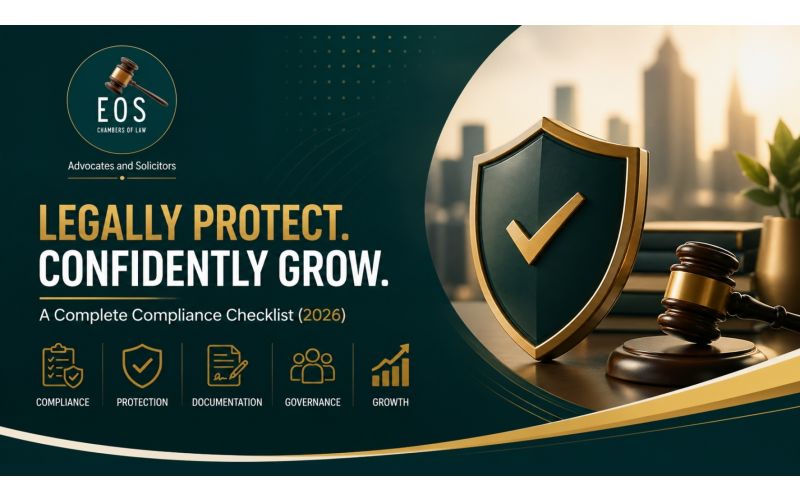
This guide provides a complete compliance checklist (2026) to help you safeguard your business from legal, financial, and reputational risks.
Why Legal Protection is Critical in 2026
With increasing digital monitoring, regulatory scrutiny, and evolving labour and tax frameworks, businesses must shift from a reactive approach to a preventive strategy.
Failure to comply can result in:
- Financial penalties
- Legal disputes
- Business disruptions
- Loss of credibility
✅ Complete Compliance Checklist for Businesses
1. Business Structure & Registrations
Ensure your entity is properly structured and registered:
- Company / LLP / Partnership registration
- PAN, TAN, GST registration
- Industry-specific licenses
👉 Right structure = long-term tax and legal efficiency
2. Contractual & Legal Documentation
Every business must maintain:
- Founders’ agreement / shareholders’ agreement
- Vendor & client contracts
- Employment agreements
- NDA (Non-Disclosure Agreements)
👉 Well-drafted contracts prevent future disputes
3. Tax & Financial Compliance
Stay updated with:
- GST filings and reconciliations
- Income tax returns
- TDS compliance
- Audit requirements
👉 Errors in tax compliance can trigger notices and penalties
4. Labour Law & Employment Compliance
Businesses must ensure:
- Proper employee classification
- Salary structure compliance
- PF, ESI (if applicable)
- Shops & Establishment compliance
👉 Employment disputes are one of the most common legal risks
5. Intellectual Property Protection
Secure your brand and innovations:
- Trademark registration
- Copyright protection
- Domain name ownership
👉 Your brand is your business identity—protect it legally
6. Data Protection & Digital Compliance
With increasing digital operations:
- Maintain data privacy policies
- Secure customer and employee data
- Ensure cybersecurity practices
👉 Data breaches can lead to legal and reputational damage
7. Regulatory Filings & Annual Compliance
Do not miss:
- MCA filings (for companies/LLPs)
- Annual returns
- Statutory registers and records
👉 Non-filing can lead to penalties and disqualification
8. Due Diligence & Risk Assessment
Before any major decision:
- Conduct legal and financial due diligence
- Identify potential risks
- Verify compliance status
👉 Prevention is always better than litigation
Common Mistakes Businesses Must Avoid
- Ignoring documentation in early stages
- Using generic or copied contracts
- Misclassifying employees as consultants
- Delaying compliance filings
- Not conducting periodic legal audits
Best Practice: Build a Compliance System
Instead of handling compliance occasionally, businesses should:
- Create a monthly/quarterly compliance calendar
- Maintain proper documentation
- Consult legal professionals proactively
Conclusion
Legal protection is not a one-time activity—it is a continuous process.
In 2026, businesses that succeed are those that:
- Plan ahead
- Stay compliant
- Manage risks proactively
Because strong businesses are not just profitable—they are legally secure.
EOS Chambers Perspective
At EOS Chambers of Law, we assist businesses in building robust legal and compliance frameworks tailored to their operations.
Our approach focuses on:
- Risk prevention
- Strategic advisory
- Long-term legal security