Can’t Seek Immunity From Legal Provisions Because Contract

Card image

Can’t Seek Immunity From Legal Provisions Because Contract In President’s Name: SC

By Team EOS |

Defending the Centre, ASG argued that the contract in the case stands on a different footing as it is entered into in the name of the President.
The Union of India cannot demand an immunity from the operation of pertinent legal provisions just because a contract is in the name of the President of India, the Supreme Court ruled on Friday.
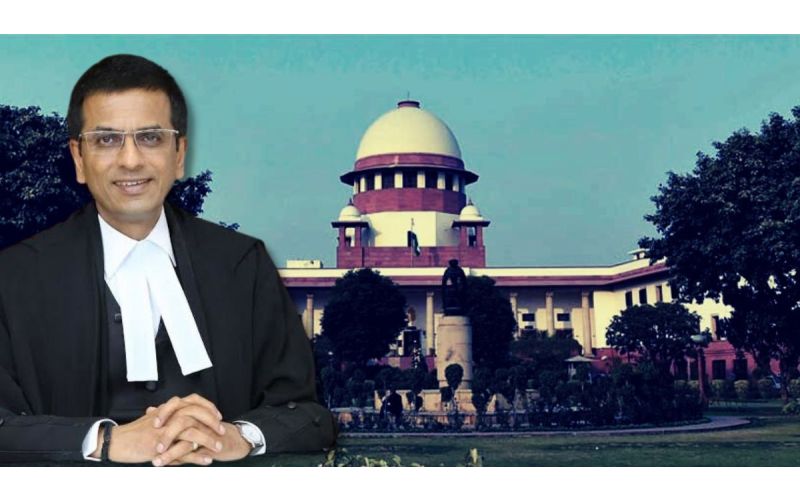
A bench, comprising Chief Justice of India Dhananjaya Y Chandrachud and justices PS Narasimha and JB Pardiwala, interpreted Article 299 of the Constitution to hold that the central government, as a party to a contract, cannot wriggle out of statutory bars by arguing that the contract is in the name of the President of India.

Article 299 provides that all contracts in the exercise of the executive power of the union or of a State shall be expressed to be made by the President or by the Governor of the State, and all such contracts will be executed by a person duly authorized in that behalf.

“Having considered the purpose and object of Article 299, we are of the clear opinion that a contract entered into in the name of the President of India, cannot and will not create an immunity against the application of any statutory prescription imposing conditions on parties to an agreement, when the Government chooses to enter into a contract,” held the judgment, authored by justice Narasimha.

Latest Supreme Court

Latest Posts

Card image

Understanding Section 377 of the Indian Penal Code

Section 377 of the Indian Penal Code, a colonial-era law, criminalized "unnatural offenses," including consensual same-sex relationships. However, in a historic judgment on September 6, 2018, the Supreme Court of India decriminalized consensual homosexual acts between adults, marking a significant ...

Card image

ADR in Workplace Conflicts: A Guide for Employers and Employees

Workplace conflicts are inevitable. Whether stemming from miscommunication, differences in expectations, or interpersonal issues, they can disrupt the professional environment and affect productivity. For both employers and employees, finding a way to resolve these conflicts quickly, fairly, and cost-effectively is ...

Card image

Insurance Companies Must Deal In A Bonafide & Fair Manner ; Should Not Just Care For Its Own Profits : Supreme Court

The Supreme Court observed that an insurance is expected to deal with the insured in a bonafide and fair manner and should not just care for and cater to its own profits. It is the duty of the insurance company ...

Card image

BREAKING| Supreme Court Issues Fresh Guidelines For Senior Designation; Previous Applicants Required To Update Or Submit Fresh Applications

The Supreme Court has issued fresh guidelines for the designation of senior advocates following the May 12 judgment in Indira Jaising vs Supreme Court which modified the criteria for senior designation. The Court has directed that Advocates-on-Record/Advocates who had applied in response ...

Card image

𝐋𝐞𝐠𝐚𝐥 𝐄𝐭𝐡𝐢𝐜𝐬 & 𝐏𝐫𝐨𝐟𝐞𝐬𝐬𝐢𝐨𝐧𝐚𝐥𝐢𝐬𝐦: 𝐁𝐮𝐢𝐥𝐝𝐢𝐧𝐠 𝐓𝐫𝐮𝐬𝐭 𝐢𝐧 𝐭𝐡𝐞 𝐋𝐞𝐠𝐚𝐥 𝐈𝐧𝐝𝐮𝐬𝐭𝐫𝐲

  🔹 𝑰𝒏𝒕𝒆𝒈𝒓𝒊𝒕𝒚. 𝑨𝒄𝒄𝒐𝒖𝒏𝒕𝒂𝒃𝒊𝒍𝒊𝒕𝒚. 𝑪𝒐𝒏𝒇𝒊𝒅𝒆𝒏𝒕𝒊𝒂𝒍𝒊𝒕𝒚. These pillars define a true legal professional. But in today’s fast-paced legal landscape, how do we maintain them? ✔ 𝑼𝒑𝒉𝒐𝒍𝒅𝒊𝒏𝒈 𝑪𝒍𝒊𝒆𝒏𝒕 𝑪𝒐𝒏𝒇𝒊𝒅𝒆𝒏𝒕𝒊𝒂𝒍𝒊𝒕𝒚: A lawyer’s duty is to protect sensitive information—breaching it damages trust. ✔ 𝑨𝒗𝒐𝒊𝒅𝒊𝒏𝒈 ...

Card image

Row Over Services: Will Examine If Parliament Can Abrogate Constitutional Principles Of Governance For Delhi, Says Supreme Court

The Supreme Court has said a five-judge constitution bench will examine whether Parliament can “abrogate the constitutional principles of governance” for the Delhi government by making a law to take away its control over services. The Centre recently issued an ...

EOS Chambers of Law

Speak With Our
Experts Today!

Get a Appointment
EOS Chambers of Law