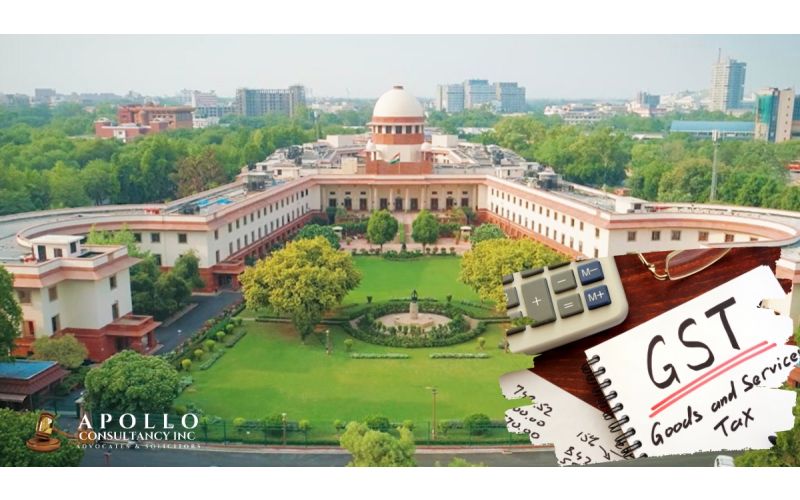
SC Ruling On User Development Fee Provides Guidance For GST,

Card image

SC Ruling On User Development Fee Provides Guidance For GST, Tax On Royalty

By Team EOS |

The SC had held that UDF collected by the DIAL is in the nature of statutory levy and the same would not be taken as consideration against any services.
A recent judgment by the Supreme Court (SC) on the user development fee (UDF) collected by the Delhi International Airport Limited (DIAL) may have ramifications on the goods and services tax (GST) as well as the income tax on royalty etc.

Last week, the apex court had held that UDF collected by the DIAL is in the nature of statutory levy and the same would not be taken as consideration against any services.
As such, no service tax is payable on UDF, the court ruled.
 
In determining that the fee collected by the DIAL is in the nature of statutory levy, the court had laid down some principles.
Firstly, UDF is collected for the development of future establishment at the airport and no additional benefit is accrued to passengers, visitors, traders, and airlines upon levy of this fee. Thus, the UDF is in the form of ‘tax or cess’, collected for financing the cost of future projects and the same cannot be taken as consideration for services provided to the customer, visitors, passengers, vendors etc.
 
Secondly, the collection is not premised on the rendering of any service.
Thirdly, the amounts collected are deposited in an escrow account, not within the control of the assessee.
 
Fourthly, the utilization of funds is monitored and regulated by law.
Though the ruling related to the pre-GST matter, experts said the principles laid down by the SC should be applied to the GST too.
“The impact of principles laid down in the judgment would need to be analyzed under the GST legislation which specifically provides that statutory levies other than GST collected by the supplier would form part of the value of supply,” said Saurabh Agarwal, tax partner at EY.
Besides, the principles may be used for determining whether the tax be paid on royalty etc, he said.
“These may be useful in determining whether the consideration in the form of fee, royalty, etc collected by the government from business entities would be in the nature of the statutory levy or the same would be considered as a consideration against any services,” he said.
Source..
Latest Supreme Court

Latest Posts

Card image

Dividend Income From Indian Entity's Establishment In Oman Having ‘Permanent Establishment’ Status Under DTAA Not Taxable In India: Supreme Court

The Supreme Court has held that if an Indian Entity’s Establishment is operating in Oman and has a ‘Permanent Establishment’ status under Double Taxation Avoidance Agreement (“DTAA”), then the dividend income received by the Indian Entity from such Establishment would ...

Card image

Supreme Court Says MP, MLA Can’t Claim Immunity From Prosecution On Charges Of Bribery

The seven-judge Constitution bench of the Supreme Court said it disagreed with the judgment in PV Narasimha and the judgment in PV Narasimha which grants immunity to legislators for allegedly bribery for casting a vote or speech has “wide ramifications ...

Card image

Children Born Out Of Irregular Marriage Legitimate Muslim Law – Supreme Court

The Rajya Sabha has passed the JThe Supreme Court has noted that children born out of irregular marriages, including one between a Muslim man and a Hindu woman, are legitimate and therefore eligible to inherit intestate property as per applicable ...

Card image

NRIs and Taxation in India: Legal Tips for Compliance and Avoiding Disputes

Navigating the tax landscape in India can be challenging for Non-Resident Indians (NRIs). Understanding your tax obligations is crucial to avoid disputes and penalties. Here are some essential legal tips to help NRIs ensure compliance and protect their financial interests: ...

Card image

Inheritance and Succession Laws for NRIs

📢 Inheritance and Succession Laws for NRIs Understanding inheritance and succession laws is crucial for Non-Resident Indians (NRIs) to manage their assets and ensure smooth transfer to their heirs. Here's a concise guide to these laws for NRIs, including key ...

Card image

Prashant Mishra, KV Viswanathan Take Oath As Supreme Court Judges

By India, Today News Desk: Justice Prashant Kumar Mishra and senior advocate KV Viswanathan were sworn-in as Supreme Court judges on Friday, a day after the Central government cleared the appointment of the advocates. New Union Law Minister Arjun Meghwal took to ...

EOS Chambers of Law

Speak With Our
Experts Today!

Get a Appointment
EOS Chambers of Law